Find your baseline
Check your size when you’re at your smallest: fresh out of a cold pool, or shrunk after an intense workout. That’s your baseline. Don’t hope for more shrinkage than that. You’ll shrink, but only down to your natural smallest size.
Go a smidge smaller
Aim for a cage just a smidge smaller than your baseline, so it compresses you a tiny bit. A snug cage keeps the friction up, so nothing moves around. A looser one leads to alignment problems.
Only a smidge, though. The cage shouldn’t be tight enough to kink anything; it just holds everything in place. Go much smaller than your baseline and the cage mashes or kinks your urethra, and you won’t be able to pee.
A cage that’s too small for you also pushes the base ring out, so it keeps working its way away from your body instead of sitting flush.
Adding room later
Cages that screw together, rather than lock together, let you add room after you buy. Put a spacer between the cage and the ring: a washer or a metal machine nut, with a slightly longer screw. The resin-dipped cage setup uses one.
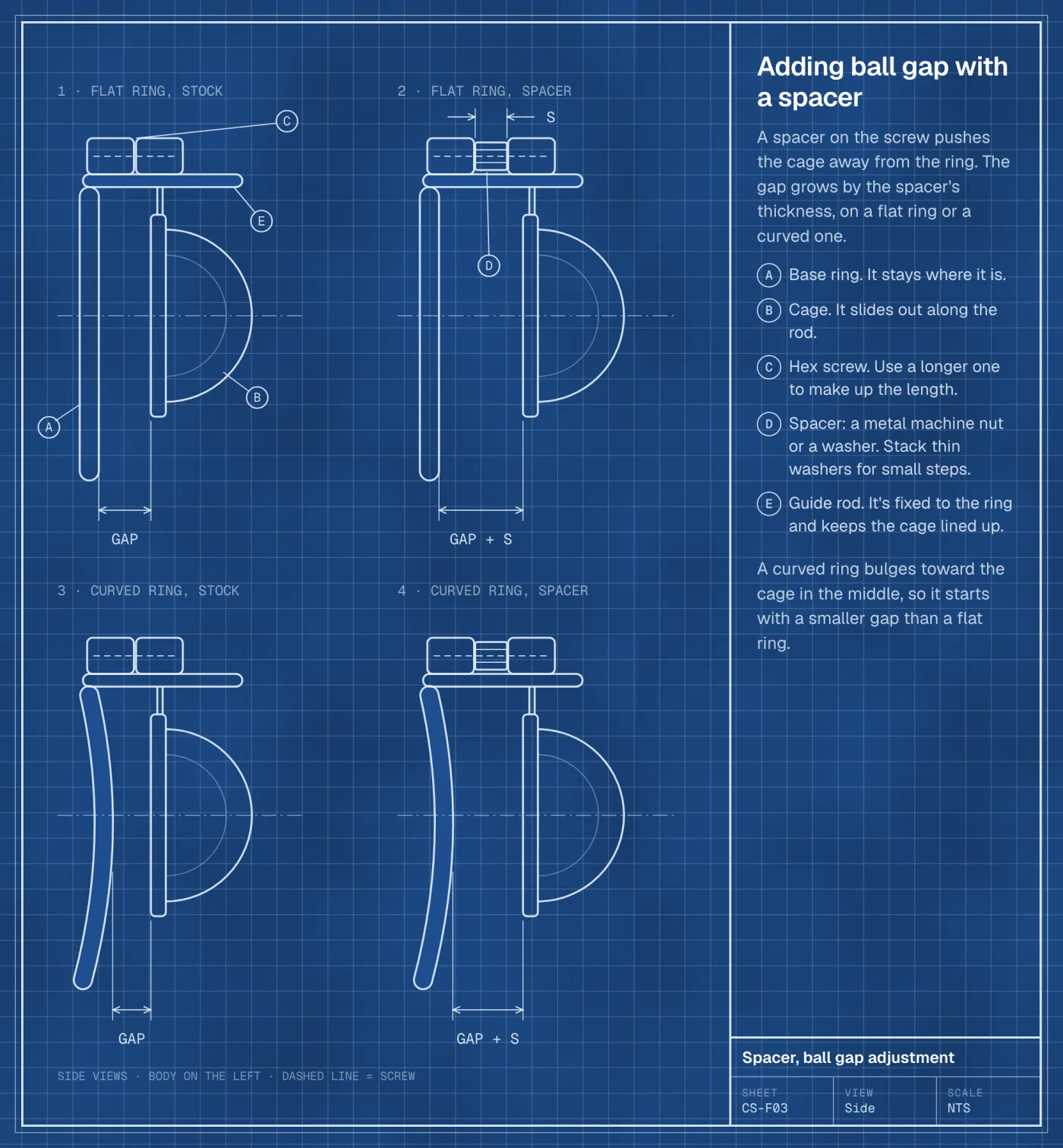
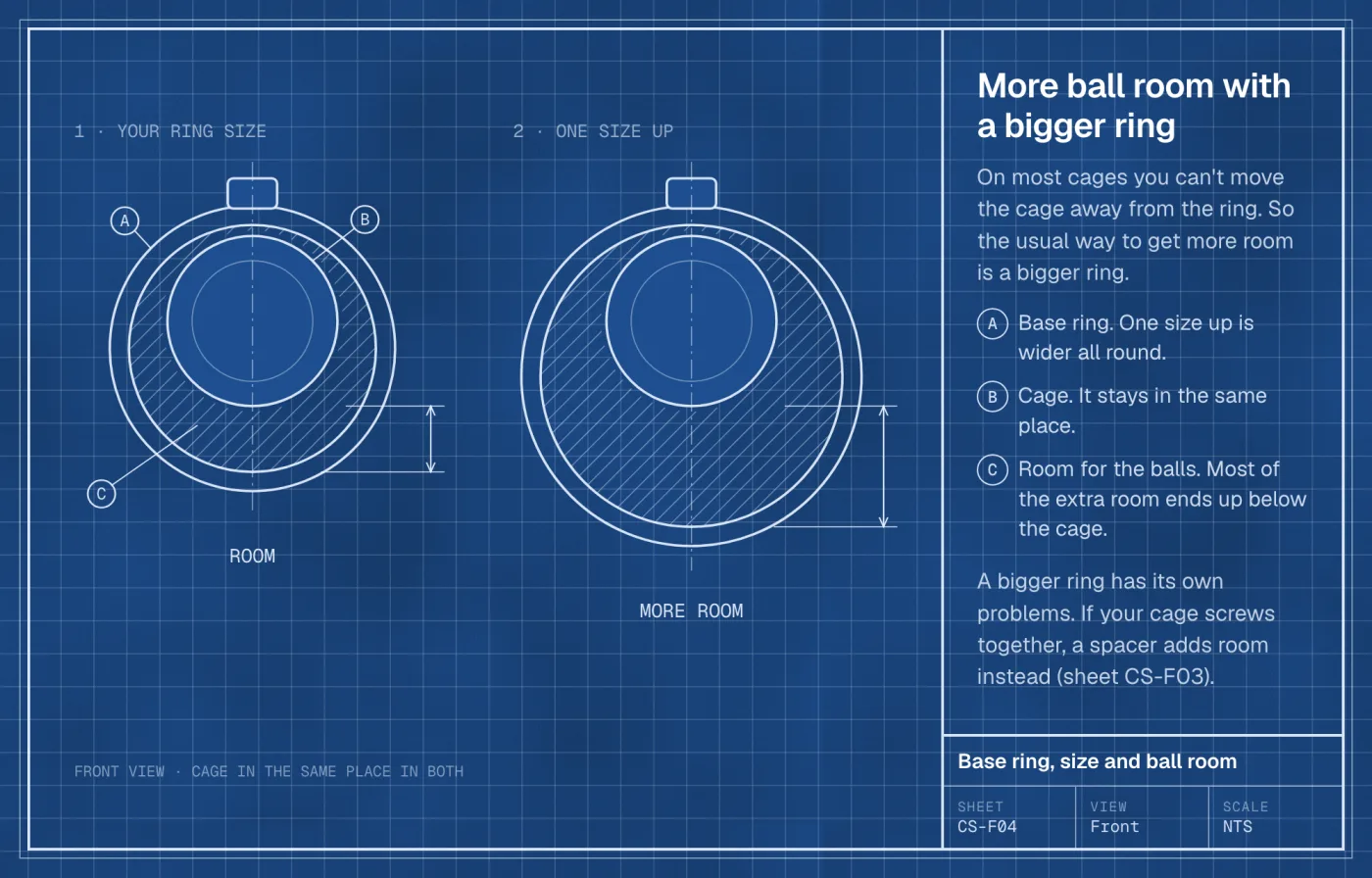
This is the fix for a lot of tricky fits: growers, tight balls, or a cage that kinks your urethra when you pee. Because you can dial in the spacing, you aren’t stuck choosing between ring sizes. You can wear a smaller ring and still give yourself a decent ball gap. Going up a ring size has its own problems.
To find this kind of cage, add “hex screw” or “Allen key” to your search.
Cage styles
- Metal holds up better for big growers. If you go from very small soft to very big hard, a plastic cage is more likely to crack or pinch.
- Flat cages aren’t for everyone. They often have a bad ball gap, and they rarely have a big enough hole to pee through, so they get messy and are hard to keep clean. A dome-shaped metal cage is a comfortable middle ground.
- Short, dome-shaped cages are good for tucking. A simple dome metal cage that screws together is one of the best ways to tuck everything away. Fufu clips are an alternative, but they slip off easily.
Buying
Most cages come from sellers on AliExpress and similar sites, not big brands. If it’s shipping to your home, check that the listing says it ships in discreet packaging. Not all of them do.
With metal cages and toys, know what you’re buying. Cheap metal can contain traces of toxic heavy metals. It’s not common, but it happens. Body-safe silicone and good stainless steel are the safe choices.
Not sure about a size? Show the group the cage you’re looking at.